


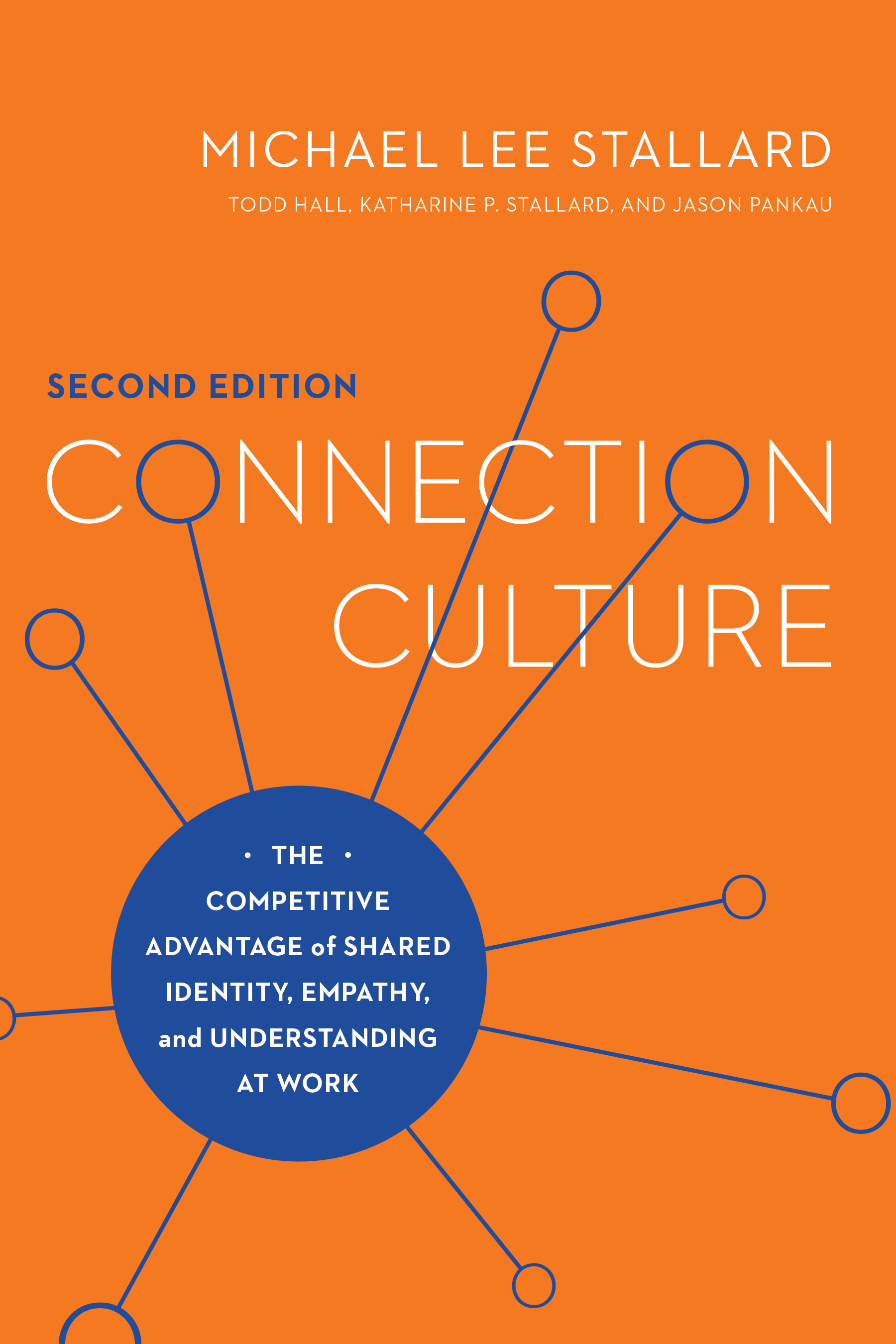
Michael Stallard, the expert in high-performance connection cultures, sees his mission as enhancing leadership engagement and worker well-being in tandem with organizational strategy, innovation, and business success. His popular book Connection Culture: The Competitive Advantage of Shared Identity, Empathy, and Understanding at Work offers practical tools to develop an organizational Vision + Value + Voice framework for effective workplaces.
Always articulate, Michael offers his viewpoint:
Amplifying a culture of connection focuses on the seven universal human needs at work: respect, recognition, belonging, autonomy, personal growth, meaning, and progress. Connecting creates a win-win culture, with advantages such as boosting employee engagement, tightening strategic alignment, and enhancing innovation and decision-making. Leaders would be wise to tap into this power to upgrade the work experience, underscored by clear vision to inspire and unite people.
Backed by analytics as well as real-world success stories, Michael confirms meaningful interactions as the trigger to superpowers deep in each of us. He links his insights to the current work climate, and advocates bridges between traditional office practices and new worker expectations from Millennial and GenZ employees.
Collaborating with top organizations in worker-intensive sectors including, healthcare, retail, government, manufacturing, and technology, Michael gains strong praise from major companies like Johnson & Johnson, Costco, and Memorial Sloan Kettering in New York City. At Texas Christian University, the TCU Center for Connection Culture commenced in 2013 based on Michael's work, and advances his principles fostering inclusion and support across communities.
Featured throughout media, including the New York Times, Wall Street Journal, Forbes and the Financial Times, Michael writes to relate current headlines with best practices in connection and well-being. Working with Alan Mulally, former Ford Motor Company and Boeing airplane division CEO, the two are putting their heads together to showcase Mulally's “Working Together” leadership and management system, leveraging Michael's Connection Culture principles with actionable steps applicable in any organization.

AI: CONNECTION CULTURE IN THE AGE OF AI. AI is not the future, it is the technology of right now. Face ID, ads in social media feeds, chatbots on websites—all AI. Many are using AI as a virtual personal research assistant—ChatGPT synthesizing answers, advanced AI language apps revising writing, navigation apps rerouting around traffic.
Three accelerating forces—atrophy of connection muscles, fragmentation from loss of shared understanding, and displacement due to greater wealth and work divides—shape Michael's framework for responses to preserve connection as a universal human need during the rise of AI. As Michael points out, AI can make us more efficient in our daily tasks, but efficiency is not the same as flourishing. And it is human flourishing—not human productivity—that is at risk, due to the growing loss of authentic connections.
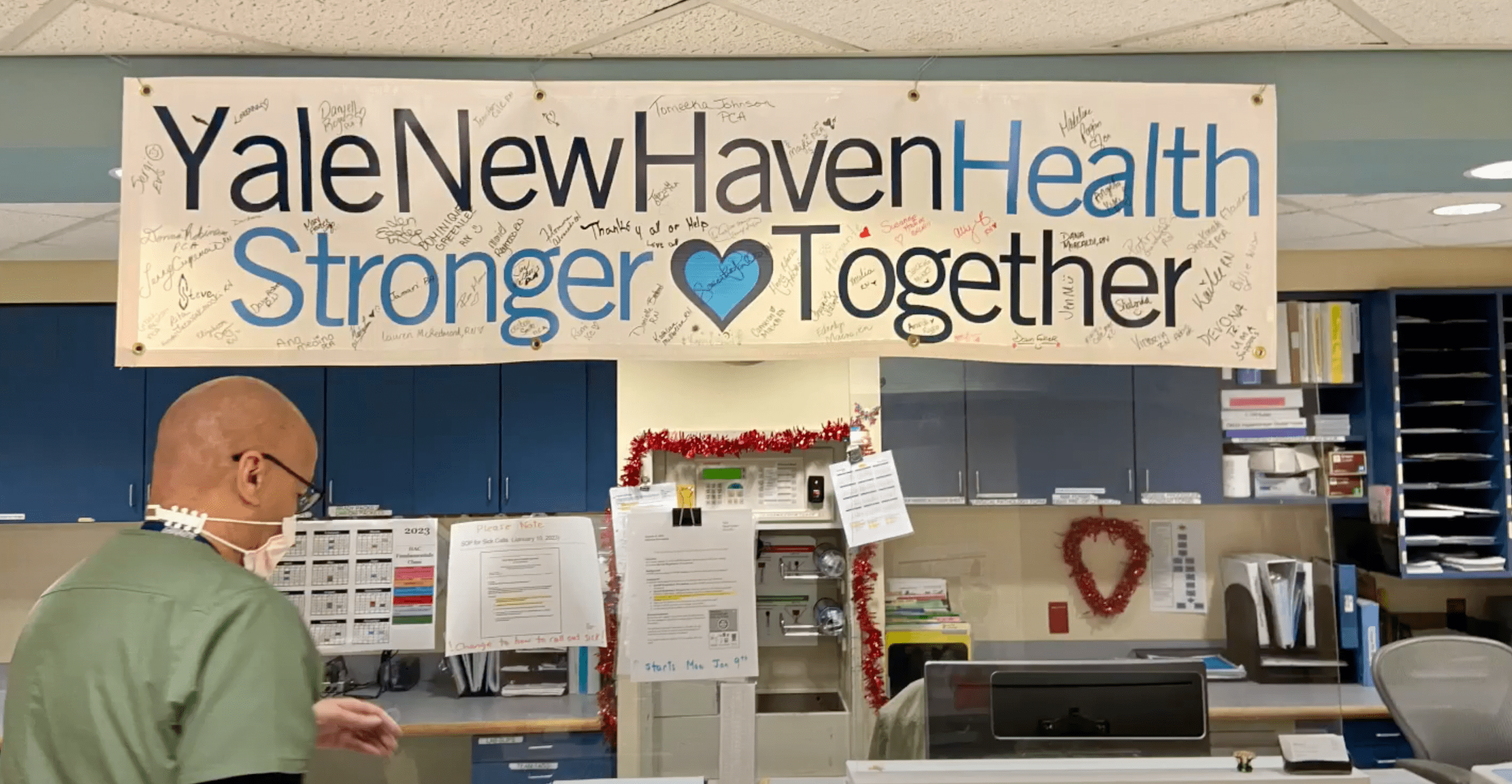
Thank you for making a difference at Yale New Haven Health. Your sessions on the importance of connection in leadership were just what we needed!
We were honored to have Michael and Katie Stallard join us for yesterday's session of Journey to Leadership Excellence. Great conversation on the importance of Connection for ourselves and across our teams. For the healthcare environment and with all of us coming through the lingering effects of the pandemic, connection is more important than ever for our health and wellbeing.
Keywords: empathy, leadership, communication, connection, loneliness, motivation, inspiration